
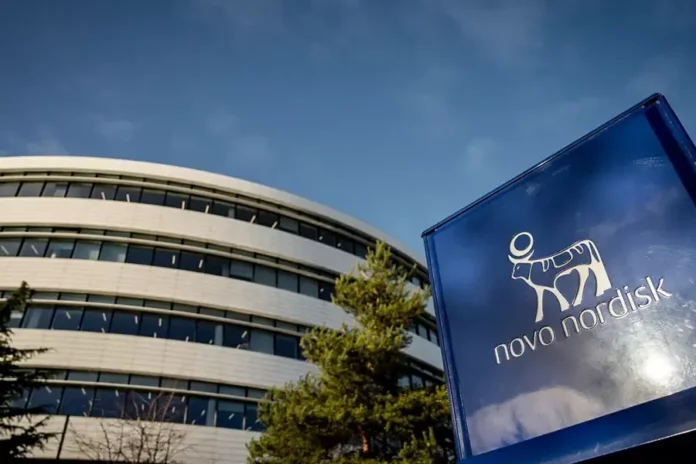
In a bold and unsettling move, Novo Nordisk has begun trimming production line positions at one of its most critical U.S. plants—signal of broader cost pressures and strategic recalibration. The cuts, revealed via employee posts and internal updates, strike directly at factory roles once thought insulated from corporate restructuring. This development raises urgent questions about manufacturing continuity, competitive positioning in the GLP-1 drug arena, and how far the company is willing to go to reshape itself.
What We Know: Layoffs at the Clayton Facility
A Reuters review of LinkedIn posts reveals that dozens of staffers at Novo Nordisk’s largest U.S. manufacturing site in Clayton, North Carolina have been let go. The affected roles span across production line technicians, quality control, project coordinators, and even HR support.
Though the company has publicly announced a sweeping plan to cut 9,000 jobs globally, these on-the-ground cuts had not been detailed until employees started sharing their own status. In Denmark alone, approximately 5,000 positions will be eliminated as part of that global overhaul.
The Clayton facility is not peripheral: it handles crucial steps in manufacturing Wegovy and Ozempic, drugs based on semaglutide, including filling, finishing, and packaging. In short, these cuts are not merely administrative—they hit the frontline operations that underpin drug supply.
A spokesperson for Novo Nordisk offered little detail beyond confirming the broader restructuring, saying, “This process takes time and our highest priority is to support our employees.”
Why These Cuts Matter
1. Risk to Manufacturing Capacity & Supply Chain Resilience
It’s risky to trim staff in core production roles while demand for GLP-1 drugs remains high globally. With fewer boots on the ground, even small disruptions—machinery downtime, quality control bottlenecks, supply delays—could cascade into delivery delays. Analysts warn that cuts at Clayton might strain operations despite a planned $4.1 billion expansion there.
These layoffs come after the company had committed to boosting U.S. production capacity to meet soaring demand. For example, earlier investments were made to expand filling and finishing operations in North Carolina. The disconnect between expansion plans and job reductions raises uncertainty over how Novo intends to ramp up without sacrificing reliability.
2. Investor Confidence & Messaging Challenges
The timing of these cuts is delicate. Under new CEO Mike Doustdar, Novo Nordisk is already under scrutiny to deliver performance after leadership transitions and competitive pressure from rivals like Eli Lilly.
While investors generally favor restructuring if it improves margins, they also worry about execution risk—especially when cuts strike core manufacturing operations. If disruptions emerge or public sentiment turns against cuts to frontline roles, the reputational and market consequences could be significant.
3. Employee Morale & Talent Retention
Beyond the immediate impact on those laid off, cuts like these can sap morale among remaining staff. Talent—especially specialized production or quality engineers—may decide to seek more stable environments. That attrition can degrade institutional knowledge or continuity.
Moreover, multiple employees posted on social forums (e.g. Reddit) describing abrupt terminations, demotions, and uncertainty about severance or recall protocols.
4. Strategic Shift in Focus
Taken together with the global cuts, these U.S. job reductions may reflect a broader shift in how Novo Nordisk plans to allocate resources. The company may be prioritizing high-margin R&D areas, streamlining structures, or redirecting investment toward pipeline drugs (including oral semaglutide, MASH, etc.).
It could also show a readiness to accept short-term operational risks in service of long-term agility. But doing so demands precision execution and strong contingency planning.
Snapshot: Global Restructuring & Competitive Pressure
Novo Nordisk’s broader job-cut plan isn’t new: about 9,000 positions globally are slated for elimination, roughly 11-12% of its workforce. The company expects these moves to deliver annual savings of about 8 billion Danish krone (approx. $1.25 billion) by end of 2026.
In announcing the cuts, the company cited the need to respond to intensifying competition in the obesity drug market, especially from rivals like Eli Lilly. Their operating profit growth guidance was revised downward due to these pressures.
So the U.S. cuts at Clayton are one piece of a larger transformation—but because Clayton is so central to U.S. operations, their implications are especially visible.
Potential Scenarios & What Could Happen Next
A. Rebalance & Rehire as Demand Persists
Novo may initially lean into cuts to free up capital but then rehire or reallocate roles as demand requires. This would require nimble workforce planning.
B. Productivity Gains & Automation as Offsets
To compensate for fewer hands, the company might push automation, process improvements, or leaner workflows. If successful, this could partially buffer supply risks.
C. Supply Disruptions or Delayed Output
If cuts are too deep or poorly managed, the consequences could be visible: slower shipping, raw material misalignments, or quality control issues. Competitors could exploit that opening.
D. Regulatory or Political Pushback
Given sensitivity around pharmaceutical jobs in the U.S., the company may face scrutiny—especially since the administration is pushing for increased domestic manufacturing and job creation.
E. Strategic Shift Away from Lower-Margin Operations
In a more aggressive move, Novo might decide to shrink or outsource certain manufacturing functions, focusing instead on R&D, licensing, or strategic partnerships.
What Stakeholders Should Watch
Supply Chain Metrics: delays, output volume, fill rates
Quality Control Trends: any uptick in rejections or recalls
Employee Disclosures: more LinkedIn or social posts may reveal deeper cuts
Financial Guidance & Earnings Reports: margin trends, cost savings, R&D investment
Regulatory or Legislative Interest: U.S. oversight around job losses in pharma
Competitive Moves: how Eli Lilly or emerging GLP-1 players respond
Conclusion
Novo Nordisk’s decision to cut production line jobs at its pivotal Clayton, North Carolina site is more than an internal cost exercise—it’s a bellwether of how far the company is willing to go to reconfigure itself amid intense rivalry in the obesity and diabetes treatment sectors.
Whether this approach proves visionary or destabilizing will hinge on execution. Can the firm maintain reliable production while operating leaner? Will morale and institutional knowledge survive? Will investors reward short-term pain for long-term repositioning?
In the coming months, the balance between cost discipline and operational resilience will be under intense scrutiny—not only from markets and competitors but from the customers, regulators, and employees whose stakes are tangible and immediate.